Smart Logistics
for Bulk Materials
Revolutionizing Bulk Supply Chains Through Interconnected Transloading
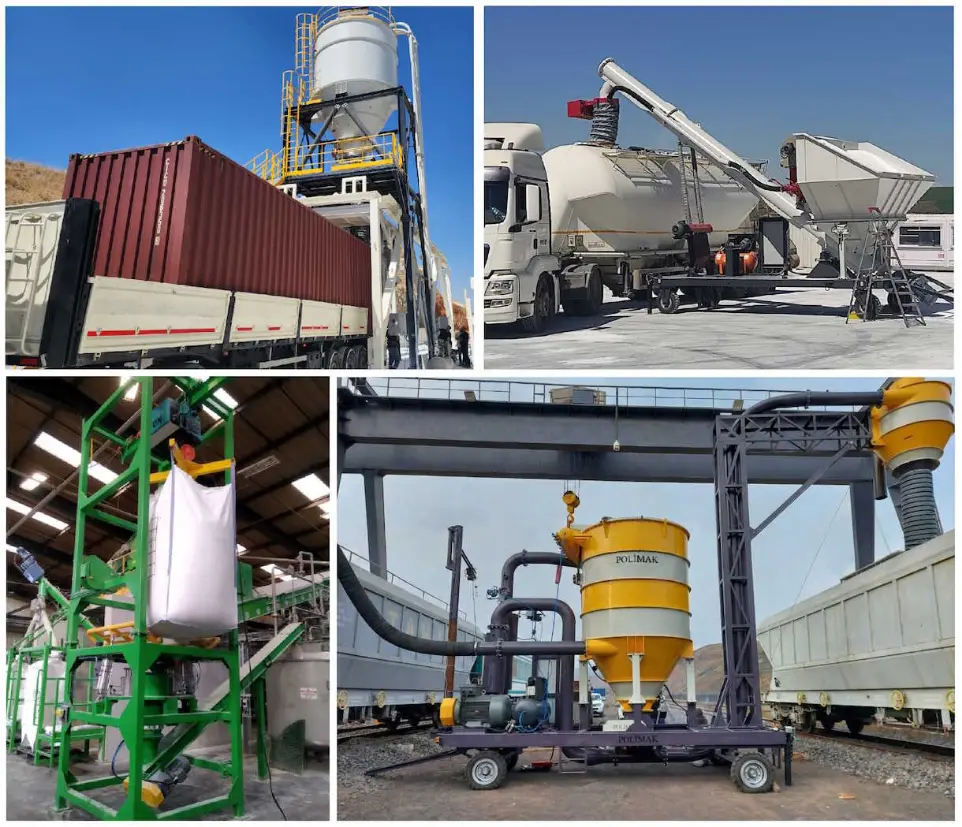
The global landscape of bulk solids handling is currently undergoing a transformative shift toward a model defined by universal connectivity between diverse handling mediums. We are moving away from fragmented, multi-stage logistical processes that traditionally involve eight or more inefficient and manual steps. Instead, we implement sophisticated, interconnected transloading systems designed to bridge the gap between every critical point in the supply chain. This comprehensive network facilitates the seamless movement of materials between big bags, sacks, silos, bulk trucks, open trucks, railwagons, containers, stockpiles, and processing lines. Our strategy relies on a "Universal Interface" approach, utilizing common mechanical and electrical connections across all machinery and components to ensure absolute operational flexibility. These innovations directly confront pressing industry challenges, such as the growing skills gap and critical labor shortages that often cripple traditional operations. By enabling direct transloading between various transport and storage vessels, we significantly reduce the heavy infrastructure costs and high capital expenditure typically required for permanent, fixed storage.
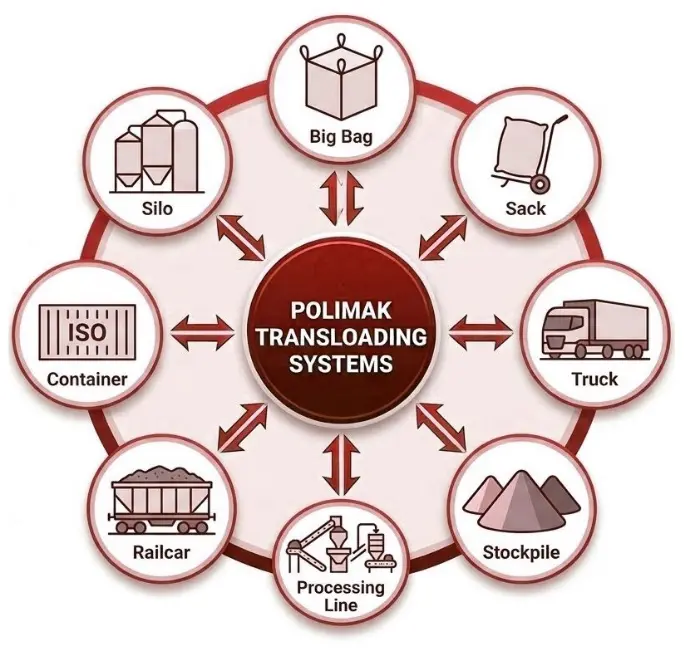
Seamless & Multimodal Bulk Solids Transport
The cornerstone of our approach is maintaining a continuous, uninterrupted flow of material across diverse transportation modes. Our solutions ensure that bulk solids can transition effortlessly between ships, trains, and various truck configurations without the need for expensive transloading charges. We achieve this by utilizing common mechanical and electrical connection interfaces across all machinery, systems, and components. This standardized design allows for rapid adaptation to changing market conditions and transportation availability worldwide. Whether moving material from a railwagon to a pneumatic bulk truck or from a stockpile to a transport vessel, the operation remains entirely horizontal and mechanical. Such flexibility is crucial for bypassing supply chain disruptions and navigating transport route changes due to geopolitical tensions or natural disasters. Enclosed transport protocols protect material integrity, significantly reducing the risk of contamination during these complex intermodal shifts. The ability to move materials seamlessly across rail, road, and sea ensures that high-volume orders reach their destination with maximum efficiency. This multimodal reach empowers businesses to leverage existing infrastructure, such as seaports and railcars, for rapid scaling. By bridging these logistical gaps, we provide a well-organized and safe path for every industrial sector.
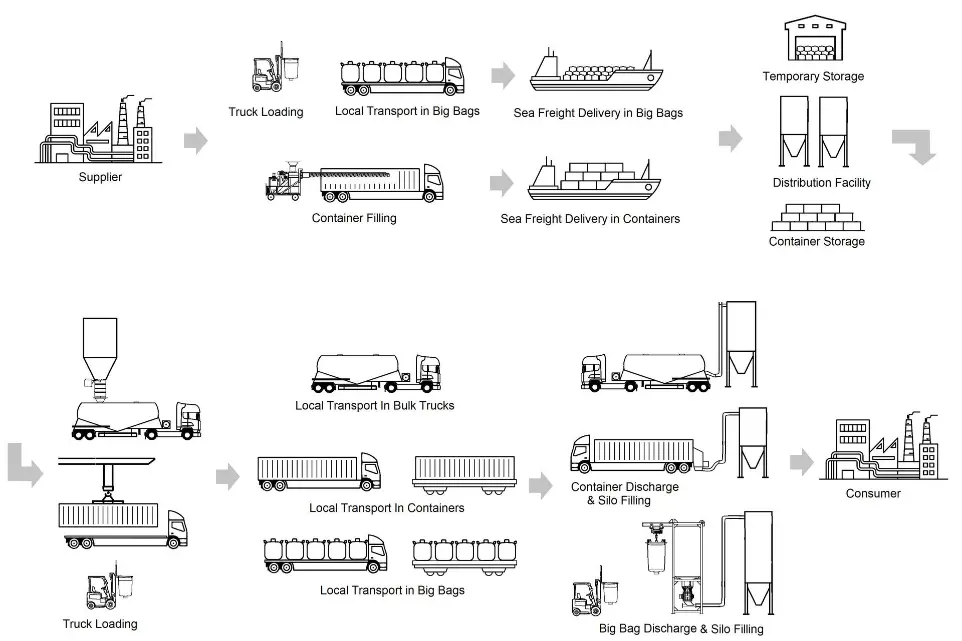
Source
Industrial Plants, Facilities, Processing Lines, Stockpiles
Transport
Rail, Road, Sea Freight
Transfer
Transloading between big bags, trucks, ships, railcars, containers
Storage
Warehouses, stockpiles, container & big bag stacks
Consumption
Industrial Plants, Facilities, Repackaging Lines
Operational Resilience for Every Bulk Material Handling Industry
Our interconnectable systems provide robust solutions for industries ranging from mining and minerals to food, chemicals, and plastics. We specialize in handling a broad spectrum of materials, including cement, PVC resin, starch, powdered milk, and plastic granules. For high-density powder products like titanium dioxide or zeolite, our systems offer reliable, round-the-clock operation with minimum maintenance. Lightweight and hard-to-flow materials, such as perlite or silica, are moved efficiently using our tiltless technology to optimize payloads. The enclosed nature of our systems ensures that zero dust emissions occur, which protects the environment and ensures worker safety. This ensures that industries requiring high purity, such as the food and pharmaceutical sectors, can trust in a contamination-free process. We provide custom-made solutions that address specific flow behaviors and system performance requirements for each material.